Intake with provenance
We map forms, channels and records. Identity and duplicate handling rules are agreed to preserve useful context for each opportunity.
Sales operations automation
Connect the path from first enquiry to proposal: lead intake, qualification, follow-up and human review built around your sales operation.
Remote projects for businesses in Brazil and internationally. We agree languages, working hours and visits as part of the scope.
The journey of an opportunity
Every opportunity shows its source, owner and next step. Price and terms always pass through a person.
A contact arrives
“I need a proposal for 12 units, delivered in November.”
Context gathered
The AI pulls the company, past purchases and the last contact, and suggests an owner.
Owner and next step
Bruno takes it, with a follow-up set for 2 pm.
Proposal reviewedApproved · Bruno
The AI drafts it. Bruno checks price and timing and clears it to send.
Agreed follow-up
“Hi Lúcia. Did you get a chance to look at the proposal for the 12 units?”
Accepted
Status updated in the CRM, with the date and the reason it closed.
Each rule goes into the plan in writing.
For teams receiving enquiries through different channels and losing context between the first conversation, the quote and the follow-up.
We map forms, channels and records. Identity and duplicate handling rules are agreed to preserve useful context for each opportunity.
Stages and qualification criteria become explicit. Reminders and drafts can support the seller while respecting consent and channel permissions.
We organize information and context to prepare a proposal. Pricing, timing, messages and commercial commitments go through the designated owner.
Process demonstration
An illustrative example of connecting context and approval. Explore each step.
Someone asks for help organizing their business quotes. The record keeps the source channel and request, and receives an owner.
The team confirms the process, tools, volume and missing details. Unknown information remains explicitly pending.
A draft brings together the problem, boundaries, dependencies and next steps. Pricing and timing await commercial agreement. The owner can correct the content.
An authorized person reviews the draft and decides whether it can be sent. History records the decision and the opportunity receives a next step.
A local demonstration using fictional content. No customer, message delivery or external system is connected. A real workflow depends on agreed scope and confirmed integrations.
What we agree together
We start with one channel and an identifiable sales journey. Tools, messages, contact rules and indicators are defined with the team. Campaign activation and media spend are separate decisions.
It can, when that is part of the problem. Our customer service and CRM page covers channels, queues and history. This service focuses on continuity from opportunity to commercial decision.
The illustrated workflow prepares context and drafts. Negotiation, terms and commitments remain with authorized people. The degree of autonomy is defined per action and in the contract.
We use available indicators such as response time, opportunities with a next step, meetings, proposals and contracts. Data must come from the real process with a clear definition of each stage.
Already running
Nellia runs its own house on the kind of system it sells. GudiSystem shows the reputation module at a fictional hotel, with illustrative data. Gestio shows the dashboard with fictional data. NelliaOS appears in its new version, with illustrative data.
Moving NelliaOS demonstration with fictional data. A request arrives on WhatsApp and Anjo prepares the reply. The review deck shows what goes to the customer, what changes after it is sent and what weighs on the decision. A person decides, the steps run through to the record and the desk clears. The same sequence repeats for three example companies, each with its own media kit.
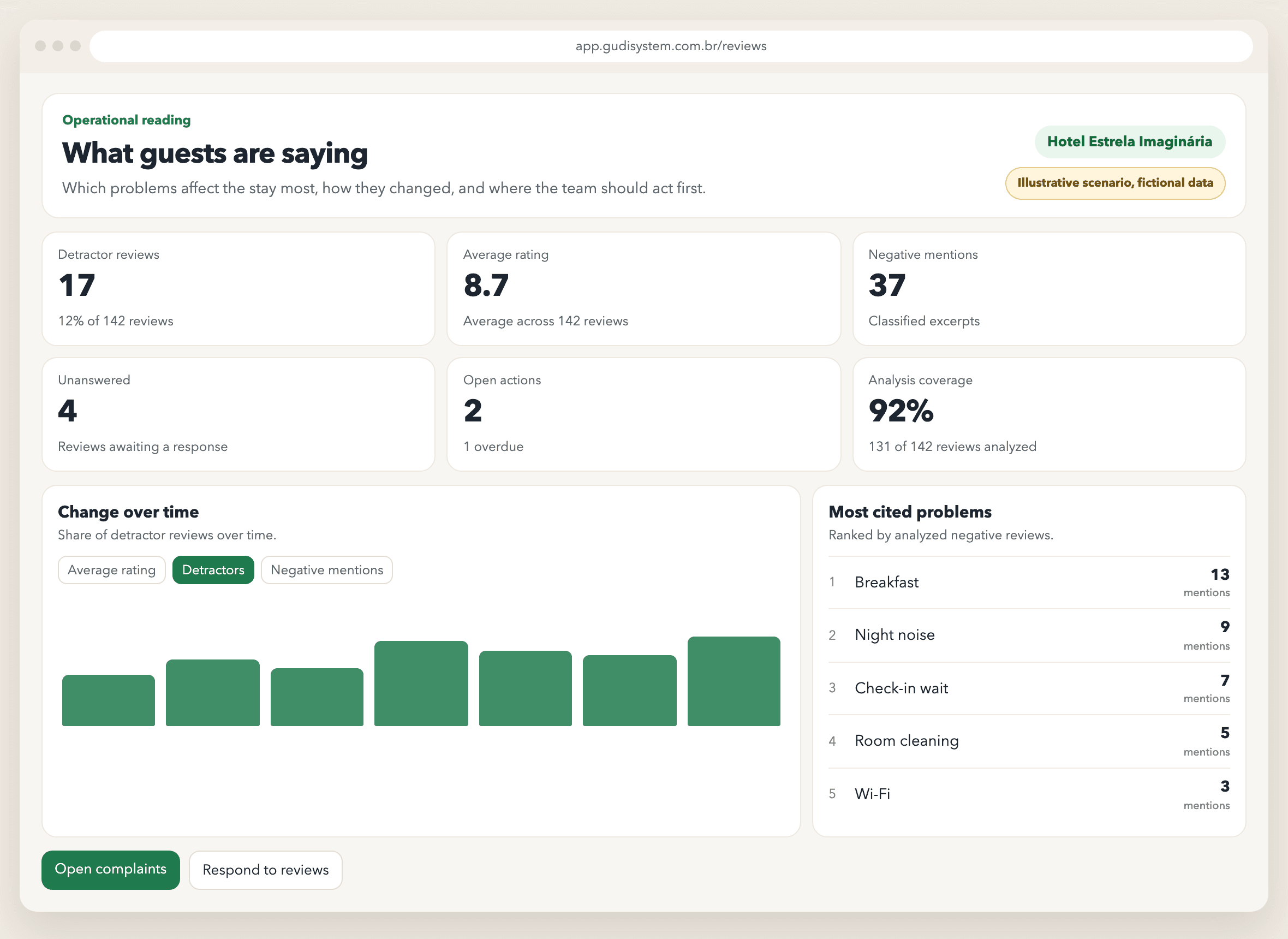
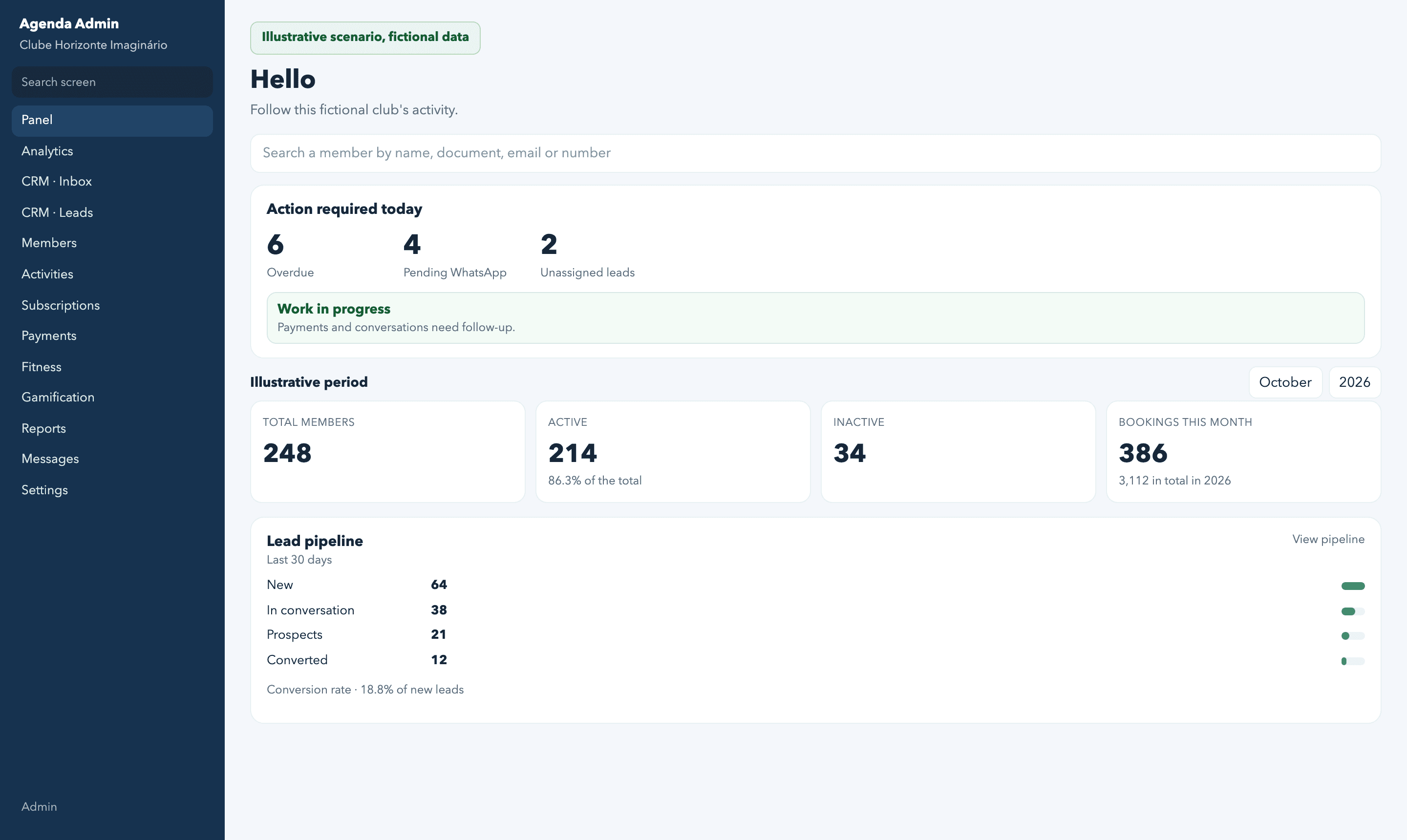
Figures from the group, reported by the group. The amount moved is what passes through the systems inside each client's own operation. Nellia's own revenue sits outside this count.
Tell us how enquiries arrive today and where context gets lost before the proposal. The conversation starts there.