A focused first release
We design with the people who use the process. The initial scope names the core task, roles, rules and acceptance criteria.
On-demand builds
Custom software to replace fragmented tracking, connect systems and organize workflows. Scope, migration and ongoing operation agreed before delivery.
Remote projects for businesses in Brazil and internationally. We agree languages, working hours and visits as part of the scope.
The journey of a spreadsheet
Every delivery goes past the people who run the process before it goes live. The change history stays with you.
A plan in writing
Scope, timeline, investment range and where the system will run.
First module in build
Orders and stock, with the rules that live in the spreadsheet today.
Review with the people who use it
“The batch column needs to show on the order.”
Fix and acceptance test
The fix goes in and the module passes the agreed criteria.
ApprovalApproved · Renata
Renata checks it and clears it for release.
Live
The team works in the orders module. The spreadsheet steps aside.
Each rule goes into the plan in writing.
For businesses that have adapted to several tools and still need parallel spreadsheets to get essential work done.
We design with the people who use the process. The initial scope names the core task, roles, rules and acceptance criteria.
We define data sources, cleanup, imports and access. Migration can happen in stages so the operation can keep working.
The proposal specifies hosting, permissions, documentation, support, exports and usage rights. Maintenance ownership is agreed from the start.
Process demonstration
An illustrative example of connecting context and approval. Explore each step.
Someone asks for help organizing their business quotes. The record keeps the source channel and request, and receives an owner.
The team confirms the process, tools, volume and missing details. Unknown information remains explicitly pending.
A draft brings together the problem, boundaries, dependencies and next steps. Pricing and timing await commercial agreement. The owner can correct the content.
An authorized person reviews the draft and decides whether it can be sent. History records the decision and the opportunity receives a next step.
A local demonstration using fictional content. No customer, message delivery or external system is connected. A real workflow depends on agreed scope and confirmed integrations.
What we agree together
Project size depends on rules, integrations, users and migration. We compare an existing product, an adaptation and purpose-built software before recommending an investment.
When an important requirement remains poorly served by available products and there is enough value to maintain a system. Total cost includes implementation, maintenance, infrastructure and future changes.
Hosting, data control, exports, source code access and usage rights belong in the contract. We discuss these before you commit.
Yes. A bounded process makes it easier to validate adoption and migration. Expansion follows observed results and agreed priorities.
Already running
Nellia runs its own house on the kind of system it sells. GudiSystem shows the reputation module at a fictional hotel, with illustrative data. Gestio shows the dashboard with fictional data. NelliaOS appears in its new version, with illustrative data.
Moving NelliaOS demonstration with fictional data. A request arrives on WhatsApp and Anjo prepares the reply. The review deck shows what goes to the customer, what changes after it is sent and what weighs on the decision. A person decides, the steps run through to the record and the desk clears. The same sequence repeats for three example companies, each with its own media kit.
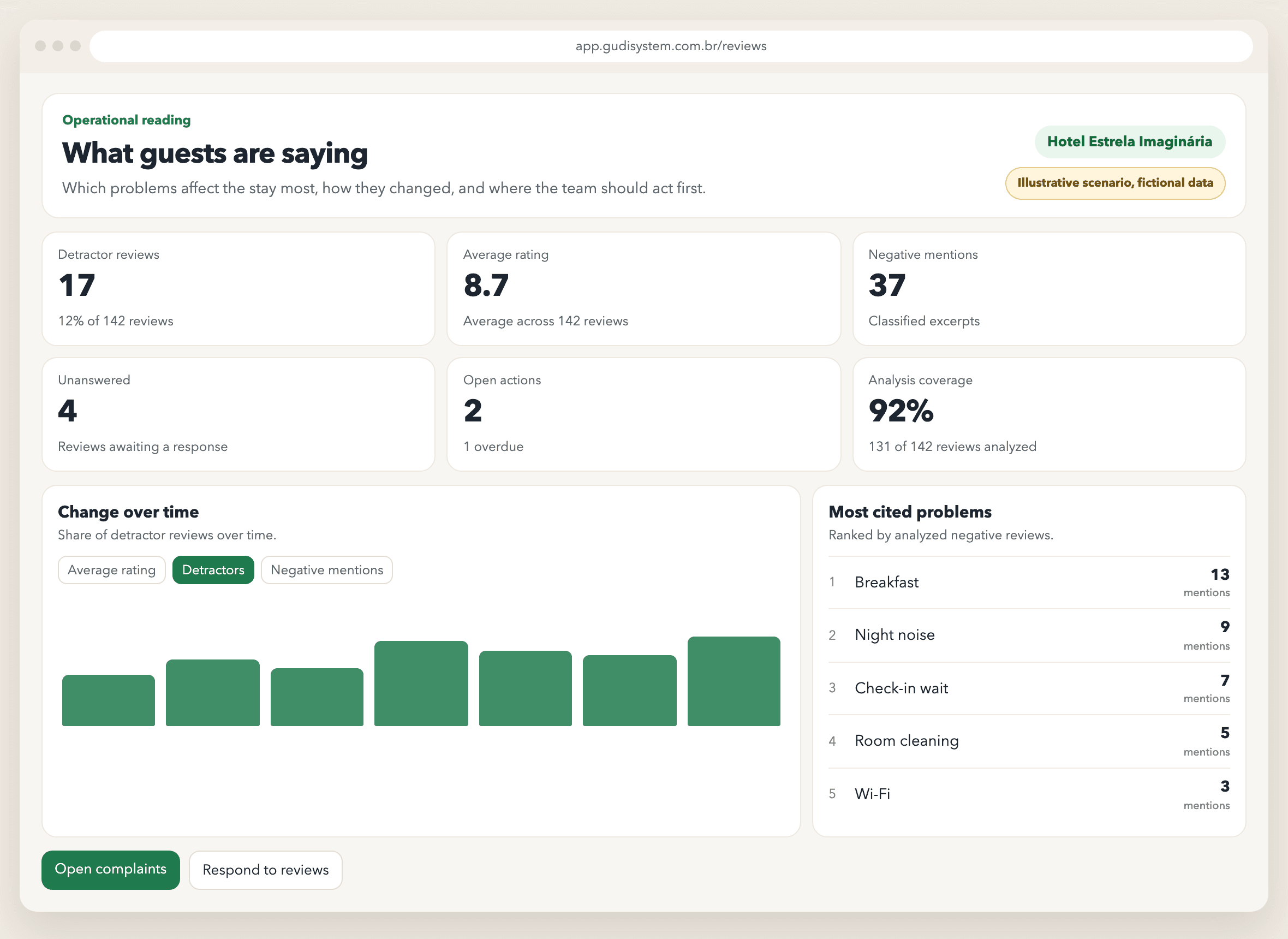
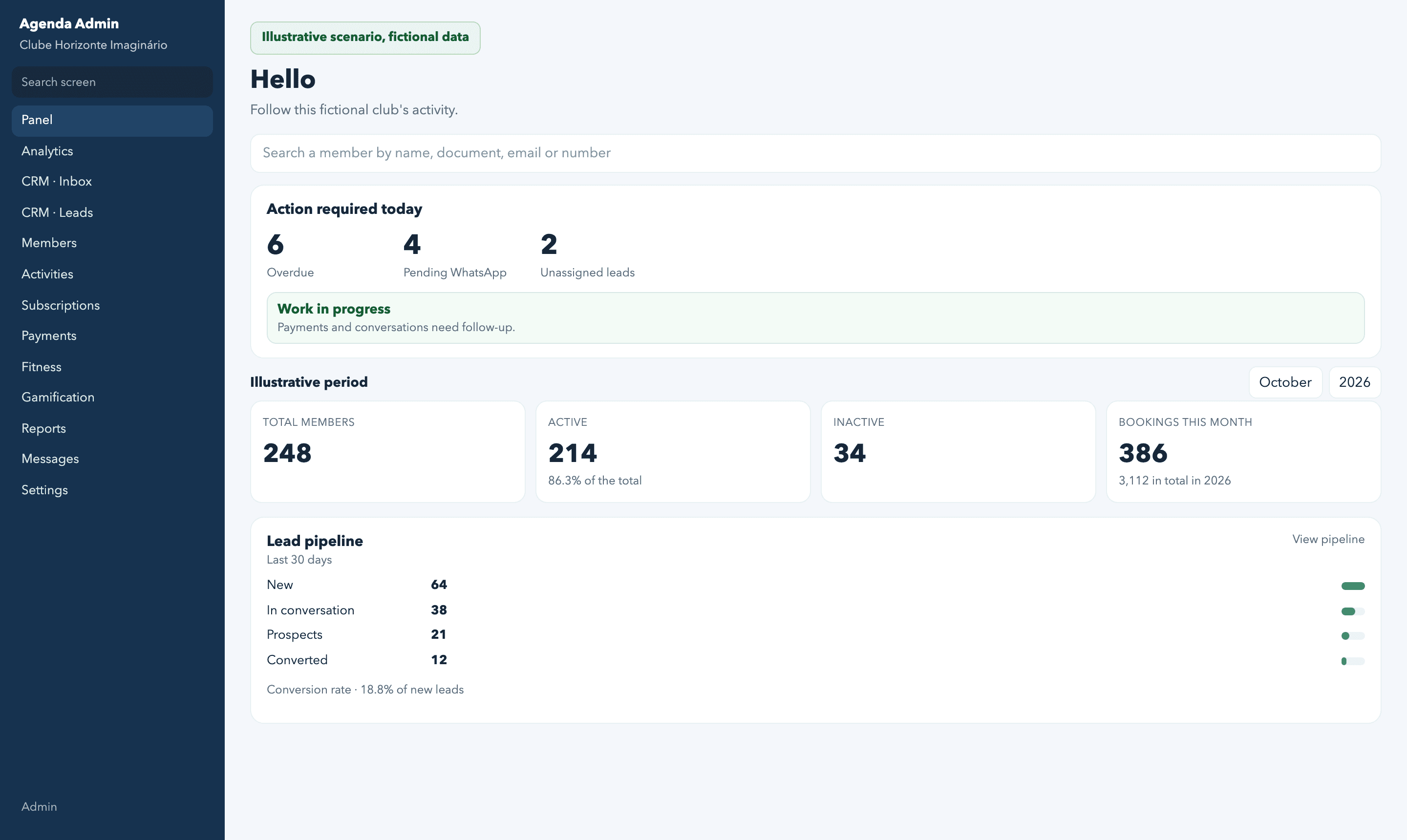
Figures from the group, reported by the group. The amount moved is what passes through the systems inside each client's own operation. Nellia's own revenue sits outside this count.
Tell us which routine still depends on a spreadsheet. The first conversation already shows what would go into the first module.